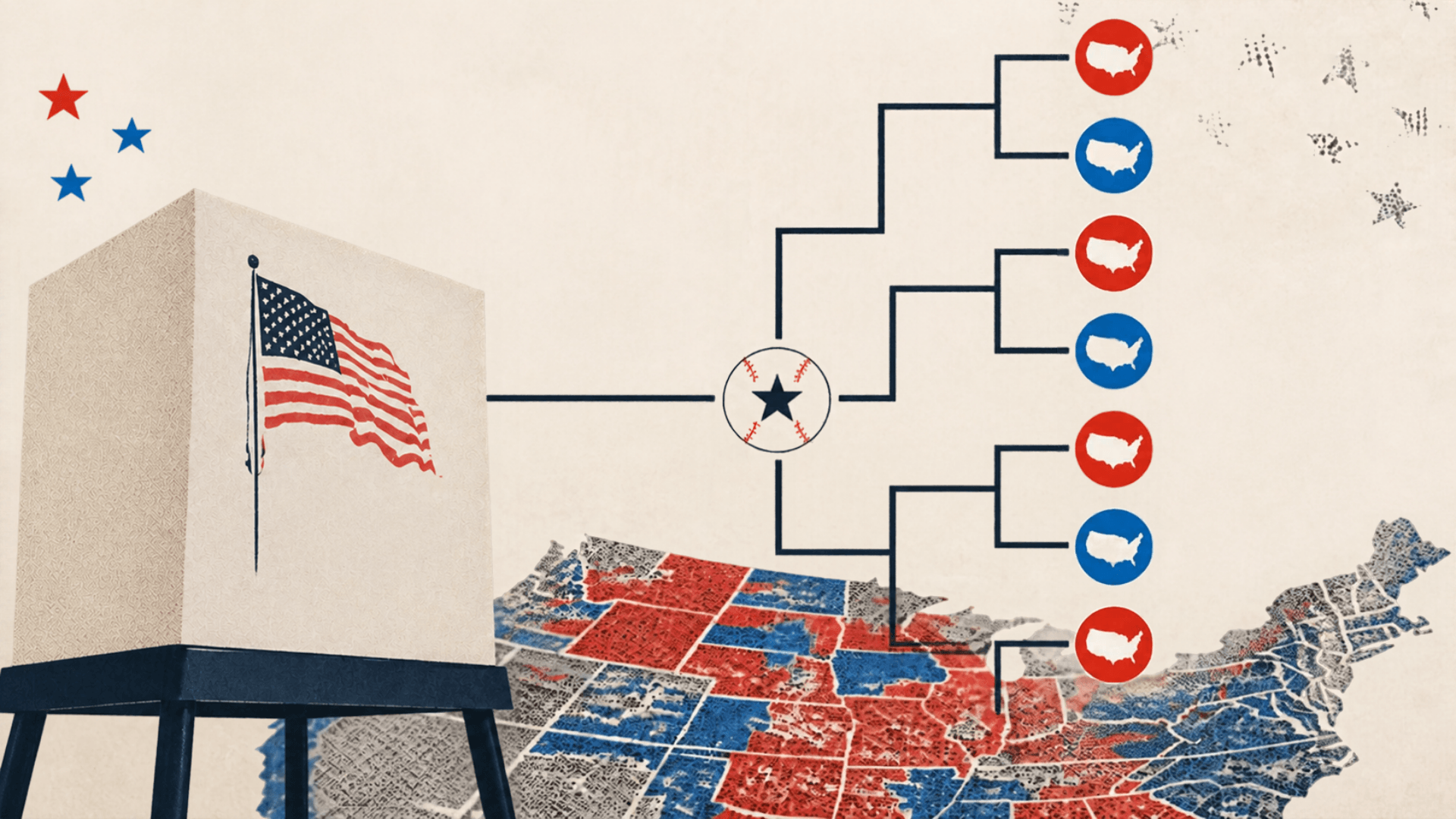

It’s Election Day. More than 100 million Americans are expected to vote, and by the end of the night we may know which party will control Congress.
But the most consequential result is already clear: In the vast majority of congressional races, today’s votes will not determine who wins.
The incessant coverage of the horse race—who has momentum, which candidates are rising, and which party will prevail—obscures the underlying reality that 2026 has been one of the least competitive election seasons in modern history. Most outcomes were effectively determined months ago in low-turnout party primaries by a small, unrepresentative sliver of the electorate.
As Unite America Executive Director Nick Troiano recently wrote in RealClearPolitics, despite all the money and attention devoted to the primaries, “we learned close to nothing about how the broader American electorate feels, well, about anything.”
Before a single race is officially called today, here is what we already know about the 2026 elections.
This is America’s “Primary Problem”: Most districts are safe for one party, shifting the only meaningful competition into low-turnout primaries in which many voters cannot—or do not—participate.
The frustration is not limited to election reform advocates.
A national poll conducted by RealClear Opinion Research/Emerson College after the primary season found that 43% of voters believe the process encourages candidates to appeal to the most partisan or ideological voters, while only 18% believe it encourages appeals to a broad majority.
Voters also see a stark influence gap. Sixty-two percent said wealthy donors, special interests and Super PACs have too much influence over which candidates are nominated. By contrast, 35% said ordinary voters have too little influence.
A majority—56%—supports replacing party primaries with open, all-candidate primaries, while more than 70% believes all voters, including independents, should be able to participate in either party’s primary.
Voters are not simply dissatisfied with individual candidates or outcomes. They are questioning whether the process gives them meaningful choices and a real voice.
If the primary season exposed the depth of the problem, it also demonstrated that progress is possible.
States with open, all-candidate primaries also continued to demonstrate an alternative. California’s top-two primary produced nine same-party congressional matchups, preserving meaningful November competition in districts otherwise dominated by one party. Alaska again experienced comparatively strong primary turnout and numerous same-party and multiparty general elections.
These systems do not guarantee a particular candidate or party will win. They guarantee something more fundamental: Every voter can participate, every candidate competes before the same electorate, and election winners must win a majority of the vote.
In Alaska and Massachusetts, voters are not just choosing candidates. They are deciding who gets to participate in future elections and whether voters will continue to have meaningful choices in November.
Alaskans will decide whether to preserve or repeal the top-four system they adopted in 2020 and defended in 2024.
Massachusetts voters will decide whether to replace separate party primaries with an open, all-candidate primary in which every voter can participate and the top two candidates advance.
Several other states are considering measures that would strengthen or restrict the citizen-initiative process—often the only practical path voters have to change election rules when elected officials decline to act. You can read our full guide to the election-related measures on the ballot.
The outcomes in Alaska and Massachusetts matter, but no two ballot measures will determine the future of election reform.
Whatever happens today, 2026 has already shown the scale of the Primary Problem, the public demand for change, and the ability of reformers to make progress state by state. That work will continue through legislation, ballot initiatives and litigation in 2027 and 2028.
Election Day should be when voters choose their representatives—not when they ratify choices already made for them months earlier.
Americans deserve competition, not coronation. And every voter deserves a meaningful vote.

Stay up-to-date on the latest news and resources from Unite America.