
Alongside control of Congress, voters will decide who can participate in elections—and whether citizens retain the power to change election laws directly
On November 3, voters will choose more than candidates. In several states, they will decide who gets to participate in elections, which candidates advance to November and whether citizens retain their power to change the rules themselves at the ballot.
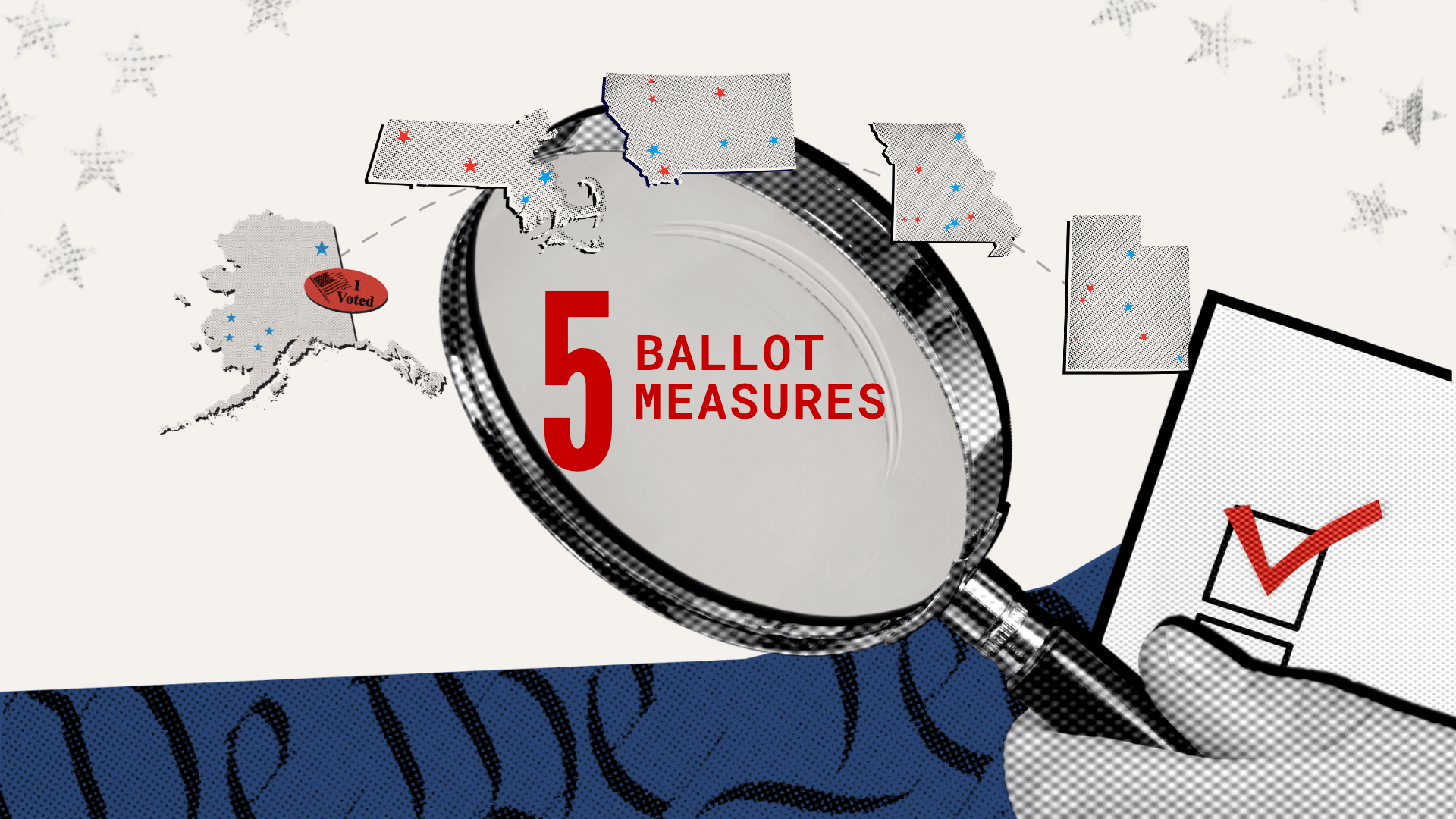
Five measures are especially consequential. Alaska and Massachusetts voters will decide whether to repeal or adopt an open, all-candidate primary system. Montana, Missouri and Utah voters will consider changes to the citizen initiative and referendum process — an important tool voters can use to enact laws when legislatures fail to act.
These ballot fights are occurring against the backdrop of the least competitive primary seasons in modern history. Just 9% of eligible voters effectively elected 87% of the U.S. House this year. The results in Alaska and Massachusetts will help determine whether that “Primary Problem” gets better or worse in those states.
The other three measures are less directly connected to primaries, but no less important to the future of reform. Election laws are often written by the politicians and parties that benefit from them. When legislatures resist changing those rules, citizen initiatives may be voters’ only practical alternative.
Alaskans adopted their current election system in 2020 and narrowly protected it from repeal in 2024. Ballot Measure 2 asks them to consider repeal again.
A YES vote would eliminate all three components of the original reform:
A NO vote would preserve the current system, which early evidence suggests is producing greater participation and competition. Unite America’s analysis of the 2026 elections found that primary turnout exceeded 31% (average primary turnout is closer to 20%). The number of state legislative candidates rose from 104 in 2024 to 117 this year, while the share of unopposed races fell from 22% to 16%. Fourteen of the state’s 50 legislative contests will feature candidates from the same party, giving voters continued competition even where one party dominates.
Like 46 other states, Massachusetts currently holds separate party primaries for federal offices. Unenrolled voters may choose which party’s ballot to cast, but voters registered with a party may participate only in that party’s primary.
This year, Massachusetts was one of the least competitive states in the country. All nine of its congressional races are uncompetitive in November, meaning they were decided in the dominant party’s primary. Only 12% of eligible voters participated in those primaries which determined the outcome. Making matters worse, not only are all nine seats uncompetitive, they’re all safe Democratic seats, meaning votes cast in the Republican primaries had no meaningful impact on the result.
Question 3 would replace those largely uncompetitive, meaningless contests with a single primary ballot containing every candidate. Every voter could vote for any candidate, regardless of party, and the top two finishers would advance to the general election. Those finalists could belong to different parties, the same party or no party at all.
A YES vote would establish the new system. A NO vote would retain the existing party-primary system.
All-candidate primaries do not guarantee a competitive race. They can, however, inject competition even in districts dominated by one party. Instead of automatically advancing one Democrat and one Republican, the system can produce a Democrat-versus-Democrat (or Republican-versus-Republican) general election in which every voter still has a meaningful choice.
California’s top-two primary, for example, produced nine same-party U.S. House contests this year. Without those matchups, 49 of the state’s 52 House races would have been uncompetitive in November.
The remaining measures concern the citizen initiative and referendum process. Citizen initiatives allow voters to propose laws or constitutional amendments directly, while referendums allow voters to approve or reject government action. Twenty-four states permit citizen-initiated measures, although the rules differ substantially.
These processes have repeatedly provided a path for meaningful reforms, including election reform. Alaska voters enacted their current election system through a citizen initiative. Utah voters used the process in 2018 to approve Proposition 4, an anti-gerrymandering reform.
Opponents of this kind of direct democracy, in state after state, are attempting to pass laws or supporting ballot measures that would restrict this process. The consequences of imposing higher barriers are not theoretical. In 2024, Florida’s abortion-rights amendment received approximately 57% support but failed because the state requires constitutional amendments to receive 60%. A clear majority supported the proposal, but it did not become law.
Montana’s CI-133 would add the powers of initiative and referendum to the state constitution’s Declaration of Rights and establish protections intended to make the process more predictable and accessible.
Among other provisions, it would:
A YES vote would add those protections to the state constitution. A NO vote would leave the current system unchanged.
The measure matters beyond any single initiative. By clarifying the process and limiting procedural barriers, CI-133 would affect whether Montanans can successfully place future reforms, including changes to election laws, before voters.
Missouri Amendment 6 would recognize initiative and referendum powers as a fundamental right under the state constitution.
It would preserve the state’s existing signature requirements and the rule that initiatives pass with a simple statewide majority. It would also prohibit the legislature from weakening initiative and referendum powers.
Most notably, the amendment would require approval from at least 80% of both legislative chambers before lawmakers could change or repeal a law enacted through the initiative process or pass a law similar to one voters rejected through a referendum. It would also allow courts to revise misleading or legally deficient ballot summaries through litigation.
A YES vote would adopt those protections. A NO vote would leave the current rules in place.
The central question is whether a simple legislative majority should be able to undo a policy voters enacted themselves. For election reformers, that question is especially important because lawmakers may have a direct interest in preserving the system through which they were elected.
Utah Amendment B would require citizen-proposed laws that create or increase taxes to receive at least 60% support, rather than the current simple majority.
The higher threshold would apply when an initiative:
A vote FOR Amendment B would establish the 60% requirement. A vote AGAINST would preserve the simple-majority standard. The amendment would not change the threshold for other types of initiatives.
That distinction is important: Amendment B would not directly apply to a non-tax proposal like Utah’s 2018 anti-gerrymandering initiative. Its broader significance is whether laws proposed by citizens should sometimes face a higher standard than ordinary majority rule, and whether adopting one higher threshold could encourage similar restrictions in the future.
These five measures are not an exhaustive list. For example, voters in 11 states will decide proposals involving voter identification or citizenship requirements.
Meanwhile, voters in three cities will decide whether to adopt ranked choice voting for local elections:
Whatever happens at the ballot box, 2026 has already been a consequential year for election reform.
Open party primaries took effect in New Mexico, allowing independent voters to participate for the first time. Washington, D.C., funded implementation of the open primary reform voters approved in 2024. The Pennsylvania House advanced a bipartisan bill that would give 1.4 million independent voters a voice in primaries. Reformers also stopped efforts to close primary participation in nine states.
The November measures are another chapter in a much broader national debate that will continue through ballot campaigns, legislation and litigation in 2027 and 2028.
Election rules can sound technical, but their consequences are fundamental. They determine who gets to participate, whether voters have meaningful choices and who ultimately holds power: voters, parties or elected officials.

Stay up-to-date on the latest news and resources from Unite America.